

Liverpool Data Recovery — Ransomware Response & Forensic Decryption
25+ years of incident-grade data recovery, cryptanalysis, and evidence-safe workflows for laptops, desktops, external drives, NAS/RAID and virtual infrastructures.
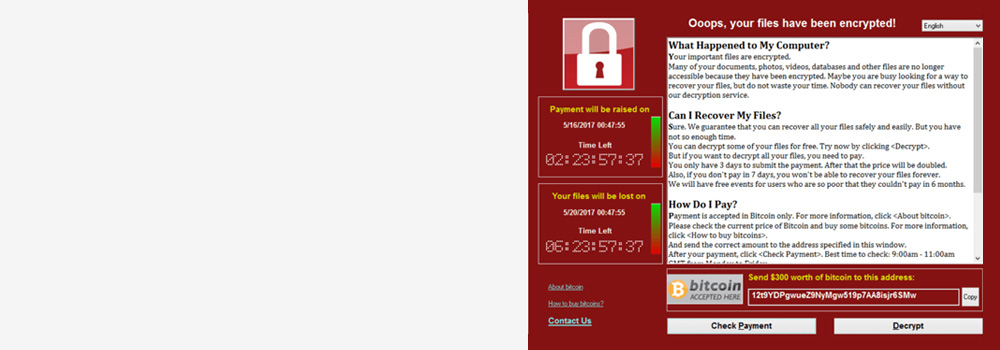
We handle full and partial encryption, wiper hybrids, and locker + data-theft variants across families such as LockBit, REvil/Sodinokibi, WannaCry and many more. Our focus is twofold: recover business data fast and preserve admissible evidence.
What we do (at a glance)
-
Containment & forensics: Image first (disks, VMs, NAS, cloud), capture volatile memory, preserve logs and network artefacts.
-
Strain identification & cryptography: Determine cipher/keyscheme, test safe decryptors, attempt key extraction.
-
Data restoration: Decrypt where feasible, or salvage intact data from snapshots, journals, caches and replicas.
-
Reporting: Chain-of-custody, findings, timeline, and recovery advisories for legal/insurer stakeholders.
Free diagnostics. Critical (expedited) service available.
Evidence-safe incident workflow
-
Stabilise & preserve — Isolate hosts; no further reboots; capture RAM (keys often reside in memory), pagefile/hibernation; acquire read-only images of affected volumes/arrays/VMs.
-
Classify the variant — Hash/rule match, note extensions/ransom note, sample execute in a sandbox copy to confirm cipher (AES/ChaCha), key exchange (RSA/ECC), and file selection rules.
-
Scope the blast radius — Which hosts, volumes, UNC shares, hypervisors, NAS LUNs, cloud mounts (OneDrive/Google Drive/Dropbox) and backups were touched?
-
Parallel tracks — (A) Key acquisition/decryption; (B) Data salvage from snapshots, journals, logs and replicas; (C) Infrastructure cleanup and regulator-ready reporting.
-
Verify & return — Hash verification, sample-open critical files/DBs/VMs; deliver securely; provide hardening guidance.
40 technical techniques we apply to decrypt or recover ransomware-impacted data
A) Identification & known decryptors
-
Variant fingerprinting: Ransom note, extension patterns, mutex/registry keys, PE traits → maps to family/build.
-
Known-good decryptors: Test vetted decryptors against sample pairs in an isolated image (no write-back to originals).
-
Offline key catalogues: For families that used static/offline keys in certain versions; test candidate keys on low-value samples first.
B) Key acquisition from memory & artefacts
-
Volatile key extraction: Dump process memory (ransomware/CSRSS/LSASS) to locate AES session keys, IVs, or master keys left in RAM.
-
Swap/hibernation mining: Parse
pagefile.sys/hiberfil.sysfor leaked key schedules and nonce material. -
Crash dumps & minidumps: If an AV/EPP crash occurred, scan dumps for key material and crypto contexts.
-
Handle & registry residue: Inspect per-user/LSA secrets, scheduled tasks, and registry blobs used for key caching.
-
Network capture correlation: If TLS interception or PCAP exists, recover key exchange artefacts (rare but possible with weak C2).
-
Attacker implant leftovers: Deobfuscate droppers to extract embedded config (RSA public key IDs, offline keys).
C) Cryptanalytic & implementation flaws (when present)
-
Nonce/IV reuse (AES-CTR/ChaCha20): If the same nonce is used across files, use known-plaintext to recover keystream and decrypt peers.
-
AES-CBC IV reuse: Exploit XOR relationships to reconstruct parts of plaintext or validate headers for seed inference.
-
Weak PRNG seeding: When keys/nonces derive from low-entropy system time/PID; brute a reduced keyspace to locate session keys.
-
RSA implementation errors: Broken padding or weak modulus generation enabling partial plaintext recovery or master key derivation (rare, but documented historically).
-
Header-only encryption: Some strains encrypt N bytes at head/tail; rebuild containers (ZIP/Office/SQLite/Photos/MP4) using intact middle blocks.
-
Key reuse per host/share: Detect uniform key material across sets; decrypt once, apply broadly.
D) Windows/macOS/platform key paths
-
DPAPI/EFS recovery: Use domain Data Recovery Agent or DPAPI backup keys to unlock user-encrypted files the malware also encrypted.
-
macOS FileVault interplay: If ransomware struck inside a FileVault volume, use valid credentials/recovery keys to mount and recover snapshots.
-
APFS snapshots: Roll back to pre-attack checkpoints; extract intact data without touching encrypted copies.
E) Storage snapshots & replicas (fastest business restoration)
-
Windows VSS: Restore from Volume Shadow Copies where not purged; export via image-level tools to avoid in-place rollback.
-
NAS snapshots: Btrfs/ZFS on Synology/QNAP/TrueNAS—clone read-only snapshots; extract prior versions.
-
SAN/array snapshots: NetApp/PowerStore/3PAR/Unity—mount LUN snapshots to a sterile host; copy out.
-
Hypervisor checkpoints: VMware/Hyper-V—mount pre-encryption VM snapshots and export VMDK/VHDX guest data.
-
Cloud versioning: OneDrive/SharePoint/Google Drive/Dropbox—mass-version restore, rate-limited to preserve API quotas.
-
Object storage immutability: S3/Object Lock/immutable backup copies for authoritative restore.
F) Journals, logs, diffs & app-level recovery
-
NTFS $LogFile / USN Journal: Rebuild directory trees and restore previous file states from transactional logs.
-
XFS/EXT4 journals: Journal replays on cloned images to roll back partial metadata corruption.
-
SQL Server/Oracle/Exchange logs: Use transaction/redo logs and Exchange .edb logs to rebuild DBs to a consistent point before encryption.
-
VM-level CBT/Redo: VMware Change Block Tracking and Hyper-V differencing disks to reconstruct pre-attack volumes.
-
Application autosave caches: Office autorecover, Adobe scratch, NLE media caches to retrieve working copies.
-
Time Machine / Windows File History: Recover unaffected bands/epochs; verify against hash catalogs.
G) Partial-damage & file-type aware repairs
-
Container header synthesis: Rebuild MP4/MOV moov atoms, JPEG EXIF, ZIP central directories when payload blocks are intact.
-
Video GOP stitching: For cameras/NVRs, reconstruct H.264/H.265 GOPs to produce playable segments from mixed encrypted/plain frames.
-
Sparse file salvage: Carve surviving plaintext extents in partially encrypted sparse files and merge with prior versions.
-
Dedup store utilisation: Where Windows Server Data Dedup is in use, restore chunks from pre-attack dedup chunk store.
H) Enterprise/AD & backup infrastructure
-
Domain DRAs & escrow: Use EFS DRAs, BitLocker recovery escrows, MDM escrowed keys to unlock layers ransomware couldn’t wipe.
-
Immutable backups / air-gapped media: Validate chain, mount in a sterile network, and restore surgically to clean hosts.
-
iSCSI LUN rollbacks: Snapshot-based recovery at LUN granularity for clustered filesystems.
I) Negotiation & key validation (when organisations choose that path)
-
Key validation in sandbox: If a decryption key is obtained (e.g., through legal/insurer-managed negotiation), test on a sacrificial image first; verify full file coverage and throughput, avoid actor-supplied decryptors touching originals.
-
Parallel decrypt: Build vetted, offline decrypt tooling that reads from the image and writes to a new target, capturing a full audit log.
-
Selective decrypt + salvage: Decrypt mission-critical sets while concurrently restoring the remainder from snapshots to minimise RTO.
Important: Modern ransomware uses strong cryptography. If keys are not obtainable and no implementation flaws exist, decryption is computationally infeasible. In those cases we focus on maximising salvage from unaffected data sources and pre-attack snapshots.
What to send & how to package
-
If safe to do so, capture memory of one actively encrypted host (we can guide you).
-
Ship drives/NAS disks/USB media individually in anti-static bags inside a small padded box or envelope with a case note (timestamps, variant indicators, priority data).
-
For RAIDs/NAS, label drive order/slots; do not force rebuilds.
-
You may also drop off in person.
Why Liverpool Data Recovery
-
25+ years of ransomware and storage forensics across consumer, SMB and enterprise estates.
-
Image-first, evidence-safe methodology; PC-3000, DeepSpar, Atola, hypervisor/NAS/SAN snapshot tooling, Volatility-based memory analysis.
-
Apple, Windows, Linux, VMware/Hyper-V, Synology/QNAP/TrueNAS, NetApp/Dell/HPE expertise.
-
Legal/insurer-friendly reporting and secure delivery.
Contact Liverpool Data Recovery for free diagnostics today.
Tell us the variant (if known), first encryption time, affected systems, and your top-priority datasets—we’ll triage immediately.