
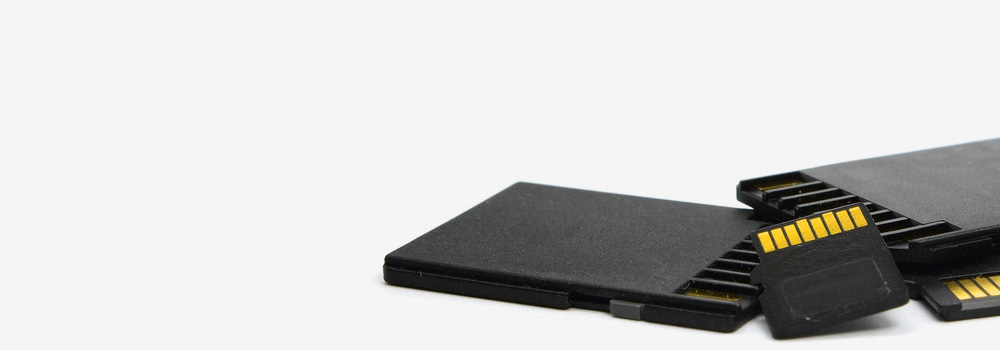

Liverpool Data Recovery — SD / microSD Card Data Recovery Specialists
Liverpool’s No.1 memory card lab • 25+ years of flash forensics & recovery
We recover data from SD, microSD and all removable flash media used in DSLRs, phone adapters, drones, dashcams, action cameras (GoPro/DJI), CCTV/NVRs, audio recorders and industrial devices. Our workflow is forensically safe (image-first, no writes to originals) and leverages professional flash platforms (PC-3000 Flash, VNR, Soft-Center, Flash Extractor) plus in-house tooling.
Card Types We Support (consumer, pro, industrial)
-
SD family: SD/SDHC/SDXC/SDUC (Standard & microSD form factors)
-
Bus & speed classes: UHS-I / UHS-II / (UHS-III where present), V10/V30/V60/V90, U1/U3, Class 10/6/4, A1/A2
-
Other removable media we handle: CFexpress (Type A/B/C), XQD, CFast 2.0, CompactFlash (CF), Memory Stick, xD-Picture, SxS, P2
-
Interfaces during lab work: monolithic pinout (wire-out), BGA/TSOP NAND (chip-off), ISP to controller test pads, hardware write-blocked USB readers for benign cases
20 Memory Card Brands We Commonly See (with representative lines)
These are the product lines we most frequently encounter in UK recoveries (not a sales ranking).
-
SanDisk – Ultra, Extreme/Extreme Pro, Max Endurance (microSD)
-
Samsung – EVO/EVO Plus, PRO/PRO Plus, PRO Endurance
-
Kingston – Canvas Select/Go/React/Focus, High Endurance
-
Lexar – Professional 1066x/1800x, Silver/Gold series
-
Transcend – 300S/500S, High Endurance, Ultimate
-
PNY – Elite/Elite-X, Pro Elite, High Endurance
-
Sony – TOUGH SD, Professional, High Endurance (microSD)
-
Kioxia (Toshiba) – EXCERIA/EXCERIA Pro, High Endurance
-
Integral – UltimaPro, UltimaPro X, Courier, High Endurance
-
ADATA – Premier, Premier Pro, High Endurance
-
Patriot – EP/V30, High Endurance
-
Verbatim – Pro+, Pro microSD, High Endurance
-
Delkin Devices – POWER/BLACK, High Endurance
-
Angelbird – AV PRO SD/microSD (V60/V90)
-
ProGrade Digital – V60/V90 SD, microSD UHS-II
-
Panasonic – Gold/Industrial SD (broadcast heritage)
-
Silicon Power – Superior/Elite, High Endurance
-
TeamGroup – Color/Elite/GO Card, Endurance
-
Netac – Pro/Ultra series microSD
-
Hama/Polaroid/Emtec – rebranded retail lines we see regularly
How We Recover SD / microSD Data (workflow)
-
Triage & Forensic Imaging – Always image first via hardware write-block. If controller errors exist, we switch to direct-to-NAND imaging (chip-off or monolith wire-out).
-
Controller / NAND Strategy – Identify controller family (Phison, Silicon Motion, Alcor, Skymedi, Realtek, AU, Maxio, etc.), die count, interleave, planes, page/block geometry, XOR/scramble.
-
Raw Read Acquisition – Stable voltage/temperature profiles, read-retry strategies, soft-ECC passes (BCH/LDPC), slow-mode for weak cells, map bad/retired blocks.
-
ECC / XOR / Interleave Decode – Reconstruct spare area, decode ECC, remove XOR/scramble, join interleaves/planes, correct endian/bit-ordering; rebuild logical page/cluster order.
-
FTL (Translator) Rebuild – Recreate address translation (WL/GC aware), resolve block pairings and sequence numbers, rebuild the logical image.
-
Filesystem & Media Repair – Fix FAT32/exFAT boot sectors, allocation bitmap, directory entries; reconstruct fragmented MP4/MOV/MXF, JPEG/RAW (CR2/CR3/NEF/ARW/RAF), GOP for H.264/H.265.
-
Verification & Delivery – Hash manifests, playable validation for video, sample-open priority assets, structured export.
50 Memory Card Faults We Recover — with Technical Approach
A. Physical / Connector / Form-Factor
-
Cracked card substrate → Micro-rework under microscope; expose bus rails; monolithic wire-out (find DAT0-3, CMD, CLK, VCC, VCCQ, GND); dump raw NAND.
-
Broken/bent edge contacts → Replate/bridge to fly-wires; wire-out to reader; if unstable, chip-off.
-
Snapped microSD → Epoxy release; scrape to reveal pads; pinout mapping; direct NAND reads.
-
Loose internal bond wires → If intermittent, go chip-off; otherwise epoxy-stabilise and wire-out.
-
Water/liquid ingress → Deionised rinse/IPA displacement; low-temp bake; attempt controller read; if CRCs persist, chip-off.
-
Heat/warping (dashcam) → Thermal stabilisation; reduce read current; if controller resets, chip-off.
-
Shorted card (over-voltage) → Component replacement on monolith where feasible; else chip-off.
B. Controller-Level
-
Controller lock-up/BSY → Vendor test-mode if supported; otherwise chip-off and rebuild FTL.
-
Firmware corruption (controller) → Attempt boot-loader handshake; dump ROM; if no init, chip-off.
-
Remapped/translating address table loss → Raw dump; analyse sequence markers; reconstruct L2P via block chronology.
-
Wear-levelling map damage → Use spare-area counters; rebuild sequence across dies/planes; heuristic reconstruction.
-
Trim/GC side-effects → Accept trimmed extents are lost; prioritise untrimmed blocks, journal remnants.
-
CPRM/locked states → If host key present, unlock; otherwise chip-off (encryption note: CPRM-encrypted user areas are not recoverable without valid keys).
C. NAND / ECC / Signal Integrity
-
High UBER/weak cells → Multi-read with read-retry voltage steps; LDPC/BCH soft-decoding; majority voting per page.
-
Program disturb → Prefer earliest valid program versions; discard half-programmed pages via spare markers.
-
Retention loss (aged cards) → Heat/voltage-assisted reads; short duty cycles; prioritise metadata blocks early.
-
Bad block table corruption → Derive new BBT from ECC failures; exclude toxic blocks; reflow logical map.
-
Plane imbalance → Correct plane/CE routing; re-deinterleave dies; rebuild per-plane chronology.
-
XOR/scramble unknown → Brute signature search on FAT/exFAT structures; infer XOR seeds; validate with directory coherency.
-
Toggle/ONFI timing marginal → Slow clock; longer data setup/hold; conservative retries.
-
Bit-order/endian anomalies → Auto-detect via filesystem anchors; re-serialize accordingly.
-
Partial page writes (power loss) → Exclude corrupted halves; reconstruct from valid frames and directory logs.
D. Filesystem / Allocation / Camera-Write Path
-
Card shows “RAW / needs format” → Rebuild VBR/BOOT, FAT/exFAT boot sectors; regenerate upcase table (exFAT); mount image RO.
-
Accidental format (quick) → Recover prior FS via backup boot; dir/bitmap walk; deep scan for orphan extents.
-
Accidental format (full/low-level) → Target journal/metadata leftovers; maximise via raw carving; note overwritten space irreversible.
-
Accidental deletion → Metadata-first restore (directory entries, exFAT allocation bitmap); minimal carving to retain names/timestamps.
-
Allocation bitmap corruption (exFAT) → Recreate allocation from directory cluster chains; rebuild bitmap.
-
FAT chain loops/breaks → Linearise clusters; reconstruct from sequential writes typical of cameras.
-
Corrupt directory entries → Rebuild short/long names; repair checksums; pair to data extents.
-
Wrong sector size geometry → Normalise logical sectors (512/4K emulation) in the virtual image.
-
Card initialised as GPT by host → Locate prior FAT/exFAT anchors; rebuild legacy layout.
-
Unsupported FS on camera → Migrate exFAT/FAT32 structures to standard layout; export content.
E. Video / Photo Container Recovery
-
Truncated MP4/MOV (no moov atom) → Build synthetic
moov/mdatfrom track fragments; time-base inference; playable export. -
Fragmented H.264/H.265 (GoPro/DJI) → GOP-aware reassembly; fix SPS/PPS/VPS; stitch LRV/THM metadata where present.
-
Spanned files across clips (4GB boundaries) → Detect span markers; merge streams; rebuild indexing.
-
Corrupt JPEG headers → Patch SOI/APP1/Exif; rebuild Huffman/DQT tables from exemplars; salvage partials.
-
RAW stills (CR2/CR3/NEF/ARW/RAF) → Rebuild container headers; extract CFA data; validate sidecars/XMP.
-
MXF/AVI proprietary streams (broadcast) → Reindex KLV; extract essence; correct broken edit lists.
F. Usage / Environment / Host Issues
-
“Card not recognised” intermittently → Signal integrity test; slow clock; stabilise; if persists, wire-out or chip-off.
-
Overheating in drones/dashcams → Thermal duty cycling; raw reads prioritising metadata; chip-off if resets continue.
-
Adapter faults (microSD→SD/USB) → Replace adapter; validate bus; if controller mask persists, advanced path.
-
Bent/dirty contacts → Clean/replate; microscopic inspection; continuity test before imaging.
-
ESD damage → Replace protection arrays (if discrete); else chip-off.
-
Host write during failure → Strict write-block; carve pre-existing data; reconstruct torn writes where possible.
G. Security / Overwrite / Special Cases
-
Locked SD (mechanical tab) → Reader-side bypass of WP pin; proceed with imaging.
-
Password-protected vendor apps → Bypass app; image at block-level; if user-land encryption present, require credentials.
-
CCTV ring-buffer overwrite → Carve contiguous GOP tails; note overwritten footage is unrecoverable; maximise playable span continuity.
-
Filesystem encrypted container → With keys, decrypt after imaging; repair inner FS.
-
Monolithic epoxy-potted industrial cards → Mill window; expose test pads; wire-out; acquire raw; full NAND pipeline.
-
Controller-level auto-encryption (rare on SD) → If KEK stored in controller only, chip-off yields ciphertext; recovery depends on intact controller or key export.
Packaging & Send-In
-
Place the card in an anti-static pouch, then in a small padded box or envelope with your contact details and device/camera model.
-
Post or drop off in person — both accepted. If possible, include the host device (camera/dashcam) for consistent decoding of proprietary file structures.
Why Liverpool Data Recovery
-
25+ years specialising in removable flash/eMMC/NAND forensics
-
Advanced tooling: PC-3000 Flash, VNR, Soft-Center, in-house parsers for FAT/exFAT/MP4/RAW/GOP
-
Monolith pinout discovery, chip-off BGA/TSOP, ECC/XOR/FTL reconstruction expertise
-
Transparent engineer reports, free diagnostics, integrity-checked deliveries
Need help now? Tell us the brand/capacity, the recording device, and the must-have folders/clips. We’ll prioritise those during verification.